Message from Joe Morris MP – UK-wide Briefing on Climate and Nature Risks
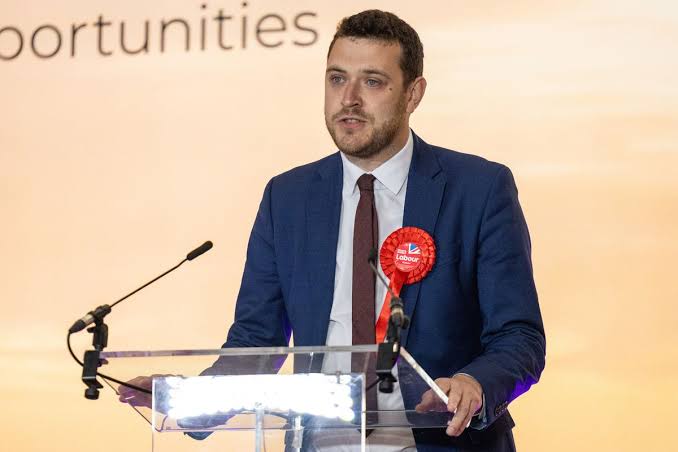
UK-wide Briefing on Climate and Nature Risks
Volume 793: debated on Monday 16 November 2026
Dear Humshaugh Net Zero,
I hope this email finds you well.
You are receiving this email because we have previously corresponded about climate and environmental issues. Given the strength of feeling on this subject across our constituency, I wanted to update you on my latest parliamentary work.
Recently, I asked the Prime Minister to consider delivering a UK-wide public briefing on the risks posed by climate change and nature loss, similar to the regular national addresses provided during the Covid-19 pandemic. My belief is simple: if the challenges we face are as significant as scientists, experts and campaigners tell us they are, then the public deserve clear, accessible and honest communication about those risks and what can be done to address them.
On the 16th of November, Parliament debated this very issue following an e-petition signed by more than 138,000 people. I know from the emails I receive every day that many constituents care deeply about the climate and nature crisis, and many of you were among those who signed the petition. It was therefore important to me that your voices were represented in Parliament and heard in this debate.
The debate itself demonstrated the strength of concern across the country, with so many MPs wishing to contribute that time constraints meant I was unable to deliver my speech in full. While that was disappointing, it also showed just how important this issue has become.
For that reason, I wanted to share my full speech with you directly.
The speech is as follows, I hope it gives you insight as to where I stand on this matter:
I want to thank the hundreds of people in my constituency who signed the petition and the hundreds more who have attended one of the 26 showings taking place across my large, rural constituency.
I want to speak about what happens at those briefings. About 30, 40 or 50 people turn up—teachers, nurses, farmers—there is usually a nice flask, folding chairs and lovely biscuits, and people watch a 50-minute film about the climate and nature emergency. When the lights come up, there is a discussion. Nobody cheers and somebody asks the question that has brought us all here: why has nobody told us?
Twenty-six screenings. In one constituency. In Haltwhistle. In the Allen Valleys. In Haydon Bridge, Humshaugh, Wylam, Ponteland and Prudhoe. In Hexham Abbey and in Trinity Methodist Church. At Queen Elizabeth High School and at Kirkley Hall College. In a Buddhist abbey at Throssel Hole, where I’m told it was shown, privately, to the monks.
Ordinary people in villages and towns across Tynedale and the Tyne Valley looked at the evidence about what is happening to the climate and to nature, decided that the rest of us should see it too, and booked the hall.
They looked at where they go for walks with the family, where the first dog they remember loved running off the lead, and they decided those landscapes, those memories, need to be protected.
The people who run those evenings tell me they don’t feel like protests. They feel like a village meeting before a flood. People sit with a cup of tea. They watch the facts laid out by scientists. They go quiet. And then they ask: why is it left to us to tell each other this?
Let me be clear about what that tells us. When a doctor has bad news, they don’t hide the scan. They sit down. They look you in the eye. They explain it, and they say what happens next. That is called respect. For ourselves, and for each other.
For too long, this country has been treated as if it couldn’t handle the truth.
It can. It already has. It’s sitting in village halls, waiting for those of us here to catch up.
My constituents have told me what worries them.
They’re worried about transparency: from Government, from international bodies, from the private sector too. They’re worried about security, their own, their country’s, the world’s. And they’re worried about survival, a word I did not expect to read so often in my inbox.
They think about their grandchildren. They think about the children they teach. They are asking what kind of valley, what kind of country, we are leaving behind. And in a good number of cases they are angry about Jackdaw and Rosebank, because it feels as if the country is being asked to take the emergency seriously while approving more of what causes it.
I represent a rural constituency, and I’ll be blunt about what that means. We don’t get to treat this as something happening somewhere else. In rural communities, the emergency is already with us.
It’s in the flood warnings along our rivers. It’s in the 13,500 households off the gas grid, whose winter bills shoot up every time there’s a crisis half a world away. It’s in the farms, where people watch the weather for a living and are the first to know when it changes.
When I asked my constituents this summer, 89 per cent of those who answered told me that protecting the natural environment and fighting climate change is a key priority. Ninety per cent wanted the Government to do more to back UK-produced food. And 78 per cent understood that growing more of it here means fewer food miles and less damage to biodiversity abroad.
These are not people who’ve been won over by clever marketing. They are people who have looked at the evidence, and who can see what the next ten years will cost if nobody acts.
So ask: who benefits from the silence?
At the last climate summit, 1,600 fossil fuel lobbyists got through the door, and the words “fossil fuels” were struck from the final text. That wasn’t an accident. That was by design.
And here at home, people on oil are paying double. Shell doubled its profits to £8.1 billion. Same war, same winter, two very different experiences.
Working people in Hexham didn’t cause this. And they are being asked to pay for it twice: in their bills, and in the world their children inherit.
When the country faced a pandemic, people saw the Prime Minister at a lectern, flanked by experts, telling them what the risks were and what was being done about them.
So why not here?
The evidence presented in Westminster last November covered health, food systems, national security and the economy. These are not niche subjects. They are the things that decide whether our children can eat, breathe, work and be safe. And the people who gave that evidence did it on the public record, in the open, with their names on it.
Meanwhile, in recent weeks, we have read reports that Government papers on the threat from nature collapse have not been published, and that there are serious concerns about food supply. I do not know what is in those documents. That is exactly my point. If they exist, they should be published. If the reports are wrong, I hope the Minister can say so, today.
Because the alternative is the one no government should want: people drawing their own conclusions in the dark. Where there is a vacuum of information, something fills it. Usually it is fear, or disinformation, or both.
Thirty summits on, we have not even reduced the rate at which we pour fossil fuel emissions into the atmosphere. And at the last one, the people who profit from the problem were in the room, and the problem’s name was left out of the text.
Say that slowly. At a climate summit, we could not agree to write down the thing that causes climate change.
And the people who have looked are not a fringe. The researchers at CAST who studied the film’s audience found that 89 per cent of viewers felt better informed, 87 per cent felt more motivated to act, and 89 per cent believed the Government should treat the climate and nature crisis with emergency-level mobilisation.
People don’t ask to be frightened. They ask to be told. And then they ask what we’re going to do.
So, I ask the Minister to ensure this Government meets the moment.
Screen the People’s Emergency Briefing. Not just on terrestrial TV, but on social media too, because too much of our society is fractured by people living in different media ecosystems.
If there are Government reports on nature collapse and food security that haven’t been published, publish them. If the reports in the press are wrong, correct the record. Either answer is better than silence.
The people who made this film are asking for a response on a wartime scale: emergency legislation, investment and job creation. I know the Minister can’t promise that overnight. But make sure the public knows we are going to take this crisis seriously.
Make sure any plan takes in the countryside: flood defence, rural insulation, oil-heated homes, local food. If the emergency plan is written just for cities, it will fail in communities like mine.
And finally, judge new fossil fuel decisions against the emergency. The public can see the contradiction between declaring a crisis and approving new oil. Mine certainly can.
The children in those classrooms, the grandchildren in those village halls, will be alive in 2070. One day they will ask what we did when we were told.
Our generation has been given a crisis to face. The very least we can do is face it with the information we need. So, I am asking this Government to have the courage to stand at a lectern, tell the country the truth, and act as if it believed it.
Not because we’re afraid, but because we love this country: its land, its rivers, its people. And when something matters, you do not simply turn away when the challenges become difficult. You show up. You tell the truth. You fight for it.
The challenges posed by climate change and nature loss will not disappear if we choose to look away from them. They require honesty, urgency and a willingness to have difficult conversations about the future we want to build. That is why I raised this issue in Parliament, and why I will continue to do so.
Thank you for your continued engagement and activism on these issues. Together, by keeping this conversation alive and demanding action equal to the scale of the challenge, we can help secure a safer and more sustainable future for generations to come.
With best wishes,
Joe Morris MP